The Uncle Ricky Collection

Richard W. Irwin
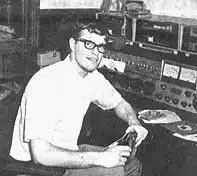
Richard Irwin (aka Uncle Ricky) in the WIXE control room, 1968. The console was a 10-channel Gates Diplomat. There were 4 ATC tape cartridge decks over the console, and 3 QRK turntables to the left.


Welcome to The REELRADIO archives. This collection of air checks, interviews, commercials and other miscellany from the Golden Age of Top 40 Radio is the “brainchild” of Richard W. Irwin, sometimes referred to as “Uncle Ricky”.

Richard was born in Flushing, NY in 1951 and moved with his family to Concord, NC at the age of five. Like so many wannabe broadcasters, Richard got his foot in the studio door at a young age. He was still in high school when he got his first gig(s) at WPEG-FM and WEGO in Concord, WMAP and WIXE in Monroe and WCTU (Channel 36) in Charlotte. After High School, Richard spent a year (1969-70) at East Carolina University where he completely revamped the campus, carrier current AM station before leaving to get his first ticket (First Class Radiotelephone License) in Atlanta. After stints at WYCL in York, SC and WAYS in Charlotte, NC it was off to Providence, RI in 1972 where he served as Production Manager for WJAR. He spent 2 years programming and Afternoon Drive at WFEC and WNOW in Harrisburg, Pennsylvania and WQXA-FM in York, Pennsylania.

In 1978 Richard moved to Sacramento, CA to program and do Morning Drive at KROI-FM. Shortly afterward, Jonsson Communications Corp. purchased KROIFM and made Richard the Operations Manager. A post he held for most of the next 16 years. Along the way Richard took a 9-month sabbatical and with friend and associate Gary Burns developed music and technical systems for WPXY in Rochester, WNYS-FM in Buffalo, NY, KXZI-FM in San Antonio and KRIX-FM McAllen-Brownsville, TX.

In 1984 Richard decided to learn to write computer code and created MUSICMINDER music scheduling software that ran on the more affordable Commodore 128 that most small market stations could easily afford. MUSICMINDER did daily playlists and complex scheduling for stations that included KROY and KFYE in Fresno, CA and WPGC in Washington, DC.

After leaving radio Richard spent 6 years designing web sites for commercial and government clients and, in 2001, became a Software Engineer with Captus Networks in Woodland, CA.

Richard made a bit of a name for himself designing and producing soundtracks for various July 4th fireworks “extravaganzas”. Of all the “related” things Richard did in radio, he often said he loved the July 4th Shows the best. He wrote and directed a July 4th Pyromusical Spectacular for KROY, KENZ, KSAC, KSFM, and KHYL in Sacramento and KEZY-FM in Anaheim, CA.

Throughout his 53-year career, no matter what the call letters, the location, or the format, common threads could be found that tied his radio experiences together. First, Richard was a true talent and a genius. His love for the production room started before his first radio job. Even as a teenager would listen to local stations and record their audio, listening to it over and over to critique and learn. That habit followed him throughout his radio career. When Richard was on-the-air there was a good chance tape was rolling. If he was listening to a competing station for ideas or just surfing the dial for the 50KW blow torches at night, the tape was rolling.

Over the years he amassed a library of air checks, commercial demos, full programs and audition tapes. Some of them he shared with those of us who collaborated with him. Others he shared with various professional publications. Those tapes and hundreds of others made up the genesis of REELRADIO.

Yes, Richard was a genius. He was a genius on the air walking up an intro to “hit the post”. He was a genius in the production room with a character voice or a commercial parody. He was a genius in creating and curating this tremendous resource reference library of the Golden Age of Top 40 radio. Like many a genius Richard had his eccentricities but that never impacted the quality of the work he produced.

At one point he noted on the site “I hope REELRADIO will survive as my contribution to the ‘radio business’. The business is allowed to forget me, but the business should never forget the great era of radio that we celebrate here.”

Richard passed away June 6, 2018, leaving behind this radio treasure for the use and enjoyment of countless radio fans now living and for generations to come.
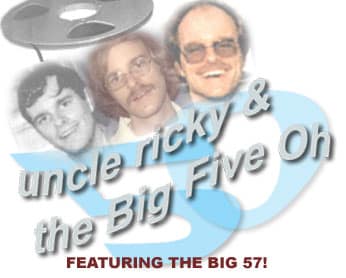
… number THREEeeeeeeeeee of four heavy happenin’ hits in a row …

On the event of my 50th birthday (January 8, 2001), I offer this loud recording of WECU (The Big 57) from May 11, 1970. WECU was a carrier-current AM station operated by and for the students of East Carolina University in Greenville, N.C.
I do this not to demonstrate my performance as an air talent (which truly sucks!) but as a demonstration of the things I loved most about this generation of Top 40 radio: the reverb, the jingles, the time-tone, the accent button and the single-channel Raytheon AGC/limiter (with tubes!)WECU Music Power Survey, May 24, 1970. CLICK HERE for a giant 85KB file that is readable.

Here it was 1970, the “Boss” revolution had boomed and was beginning a slow fade on the West Coast, but 1960’s Storz Top 40 was the order of the hour at this small eastern Carolina liberal arts school. I don’t remember exactly how I bribed people to let me do it, but even though all the jocks were volunteers, and some hated Top 40 music in general, they all wanted to sound like big-time DJ’s. While many college radio stations featured Free-Form 101, The 57 Funtimers played it by the rules.

This aircheck was made just a few weeks before the end of my freshman (and final)
year in college. More than anything, I wanted to work in radio, so I forgot about
getting a degree and pursued a paycheck, instead.

The reverb was a Fisher Space Expander. It was mounted in a metal cabinet, complete with balanced I/O, and a power supply for the relay that activated the “accent” feature.
The jingles were a re-sing of a PAMS WQAM Grid package. I was the “imaging” voice, as well as the voice of Mr. Treasure, David and Lisa.

College pal Carl Davis (also a freshman) plays the part of the “57 Addict”. WECU was a “carrier-current” station serving a dozen different dorms. A 50-100 watt AM transmitter was located in the basement of each dorm and the RF was coupled into the building’s AC power system. Audio was fed by phone wires all over the campus. Failures were all too frequent.

Actual WECU Carrier Current Transmitter. Operated in the basement of Scott Dormitory at East Carolina University in 1970. Saved and photographed by Boris D. from Canada.

The voice that speaks my name (at 1:32 into this epic) is that of Doug Limerick (ABC Radio News) who was working at WIXE in Monroe, N.C. at the time. (My Professor of Top 40 Programming was Brother Dave Hedrick, GM/PD at WIXE.) I think the time tone
was a direct WIXE rip, too.

I ripped off Jack Gale and BIG WAYS in Charlotte for the Mr. Treasure promotion, and 57 Fundamental News was patterned after my all-time favorite WFUN Funcast, of course.

I’ve cut this pretty tight, hope it’s tight enough. In any event, it’s my birthday, and this is what I wanted to play. It was a time when I loved working in radio, and I imagined great future success in radio, and I thought radio would always be my work. I still love Radio, and even though she’s forgotten me, I’ve not forgotten her.

For my 50th birthday, I do recognize I’ve been blessed to have lived this long without major illness, accident or bankruptcy! Thanks to those who have helped make my way easier, at whatever time, for whatever reason…

©2001-2007 Richard W. Irwin and REELRADIO, Inc. All Rights Reserved
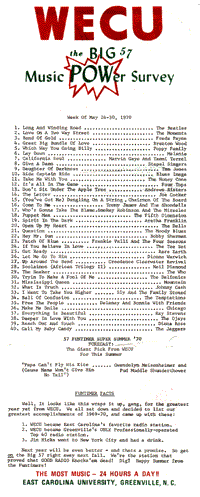
WECU Music Power Survey, May 24, 1970
Picture of low-power WECU carrier current transmitter
… it sounds like New York, and it is …
Description by Uncle Ricky Scott Muni, part of the WABC staff when The Beatles first came to New York City, left the Top 40 format and joined WNEW-FM in December of 1967. Muni was at WNEW-FM until November, 1998. (Muni suffered a major stroke in 2003, and passed away on September 28, 2004.) This star-studded aircheck compilation from October and November 1985 features Muni and other WNEW-FM personalities at the Hard Rock Cafe with Joe Piscopo, Mayor Ed Koch, David Bowie, Billy Joel, and Frank Zappa. There’s lots of great production, too, including several minutes of the soundtrack choreographed to the giant fireworks display on the evening of November 1, 1985. This treasure was on side 2 of the final(?) volume from Cashbox magazine and MCA Records titled Ultimate Radio Bootleg Vol. VI. The expert effort on this one is attributed to WNEW-FM production manager Tom Couch. Charlie Kendall, John Webb and Jimi Fox (Producer) were listed as responsible for compilation, editing and engineering of the LP. Fox (ex-Ten-Q jock and KCBQ PD) was VP of National Promotions for Mercury Records and radio editor for Cashbox.
… he gets drinkin’, and on that dope and stuff …
Description by Uncle Ricky This historic recording, featuring three of Los Angeles’ finest morning talents, appeared on Programmers Digest, (Vol 2, Issue 1, July 1973). If you believe the story, KHJ morning man Robert W. Morgan had made a bet with New York morning guy Don Imus that he would play Imus’ new record. But Morgan claimed he didn’t say on what station he would play the record, prompting a visit to KGBS and a frolicking exchange with Bob Hudson and Ron Landry. Today, only Don Imus knows for certain if there was such a bet and if Robert W. got a check.
… this reminder here from the Big Ange – we are frequently compensated for our appearances …
Description by Uncle Ricky I suspect that Big Ange (Andy Jackson, real name John Manzi) did a bit better as a result of his “frequently compensated personal appearances” than he did as an employee of WJAR (920) Providence, or before that, as the long-time nighttime jock at rival WPRO (630). Program Director Dave Hedrick convinced Ange to leave his legacy position at WPRO (a Top 40 legend) and join WJAR (an “Oldies/Personality” hybrid consulted by the late Tom McMurray.) By the time Andy joined “Superstar J-A-R”, most of the old-line Outlet Company Channel 10 TV and Department Store employees had become accustomed to the strange, noisy new crew that had invaded the radio studios. This recording, made public for the first time here, also includes production supertalent Jeff Mathieu (Beatles P.I.) and the late Mike Sands (Prevention Magazine P.I.) as well as a few seconds of long-time New England radio pro Charlie Jefferds (Mount Hope Marina House) who was morning drive host at the time of this aircheck. Ron Bradbury and Dave Layman (WJAR News) are also featured. The radio station shared the 5th floor of the Outlet building on Weybosset Street in Providence with WJAR-TV; there were always news people around and Ange loved to tease them. (The Layman and Bradbury segments are from December of 1974). Big Ange was one-of-a-kind. He was a genuine local radio star, and he did it the hard way – by years of going from club to club, glad-handing the bouncers and bartenders and meeting the people of Providence. At the time, I cringed at his uneven board work and seemingly disoriented presentation. But, in listening to this a quarter-century later, I realize how fortunate I was to have known Big Ange and how much fun it is to hear him again. John Manzi passed away July 17th, 2010, in Providence, R.I. He was 67.
… the sleigh ride is outstanding, can’t say much for the view of the horse …

Description by Uncle Ricky

This profile of KIMN appeared on Volume 1, Issue 10 of Programmer’s Digest, dated December 18, 1972.

Assembled just before Christmas, 1972, the composite features Bill Stevens, Al Brady (PD), Scott Kenyon, Dave Thompson, and Brant Miller.

… I happen to know more about it than you may think …
Description by Uncle Ricky [An Uncle Ricky 49th Birthday Surprise, January 8, 2000] Bill Turner grew up with me in Concord, N.C. – we even lived on the same street. In 1971, he worked with me at WYCL in York, South Carolina, where I was PD. The last time I heard from Bill Turner was in the early 1980’s. He was an commercial airplane pilot by then. Bill did work at a few stations in markets larger than York (unrated, population 5000!) He always sounded very comfortable and happy on the radio. He even delivered my “High Low Now Minute Measurement” and “Music Power Popularity Poll” liners successfully! In the summer of 1999, I discovered this long-forgotten recording of Bill from June of 1971. In addition to being PD, I did all of the audio maintenance. I worked endlessly on the station’s processing, often testing new schemes after midnight (during the “experimental” period) driving around in my green Camaro, listening to the station on the Delco radio, making it brighter, and louder. This aircheck is bright and loud, complete with a little “ring” around 5Khz. Damn, AM radio was fun. You will hear Gwinsound jingles combined with PAMS pre-records and some killer “imaging” voice-over from the late Bob Chesson. Bob lived in Charlotte. We had a four-track production studio in York (about 30 minutes south of Charlotte) and Bob traded v/o for some cash and studio time. No mention of WYCL would be complete without acknowledging the kind and progressive resident owner and GM. Curtis Sigmon somehow found the money to make sure he had the best equipped 1KW directional daytimer in the country. We had cows in the tower field, and bushels of sophisticated audio gear in the building. A slice of a younger Uncle Ricky is included on a Carrier spot, Thom Berry is featured with a snippet of news, and the reverb was a Fairchild “Space Expander”. I have a lot more of WYCL, but for my 49th birthday, I invite you to enjoy this sample of tiny-market Top 40 and my friend Bill Turner. -Uncle Ricky January 8, 2000
… Hey, John R – whatcha gonna do …

Released on Volume 2, Issue 3 of Programmer’s Digest in August of 1973, this feature is narrated by John Young, (at the time, KILT, Houston) and honors the legendary John “R” Richbourg, who was heard on 50 kilowatt WLAC, Nashville, Tennessee for 32 years. It includes his July 28, 1973 farewell on WLAC, and an interview in which he talks about his life.

In the book The Hits Just Keep On Coming – The History of Top 40 Radio, Ben Fong Torres writes:

John Richbourg had a direct impact on a teenaged Robert Smith, listening in Brooklyn … Smith, the future Wolfman Jack, wrote a memoir, Have Mercy! in which he recalled John R.’s theme…. “Hey John R., whatcha gonna do? C’mon, John R., man, and play me some rhythm and blues”, to which Richbourg would roar out his response, “Whoa! Have mercy, honey, have mercy, have mercy.”

… Shovan’s got a third paycheck from management to replace the other two – what a competitor! …

This elaborate “audition tape” by the late Tom Shovan, VP/Manager of Operations for CD MEDIA, was featured in Programmer’s Digest (Vol. 1, Issue 10, 12/72). Shovan passed away at the age of 59 on April 9, 1999 while hospitalized for injuries sustained when he fell in his home.

Shovan’s career, much of which is highlighted in this feature narrated by Dave Hellerman, included stops at WMEX in Boston in 1958 as Melvin X. Melvin, WPOP in Hartford, WPTR in Albany (1966), WKIP (Poughkeepsie, N.Y.) and WHVW (Hyde Park, NY). In later years, Shovan was VP/Program development of Radio Today Entertainment, NYC; VP operations for Rick Dees Entertainment and a columnist for Hitmakers Magazine.

… Are you a hippie? Not hardly. Why? I’m bald …

From Programmer’s Digest (Vol. 1, Issue 8, 11/20/72), this 1972 composite of WAYS, Charlotte, demonstrates the influence of actor Jay Thomas on the properties owned by Sis and Stan Kaplan in 1972. Not only did Thomas have a solid success at WAPE, but he resurrected WAYS from near death after a severe thrashing by Tom McMurray’s WBT.

In addition to Thomas, this composite features John Lodge, Jimmy Madison, Mitch Braswell and Beau Matthews, and the syndicated version of The Last Contest. Great talent, solid performance, good facilities, full support of the owner and it was all connected with the right people at the right time.

… Don’t forget to smell the flowers, ’cause we’re only here for a short visit …

From Programmer’s Digest (Vol. 1, Issue 9, 12/72), this 1972 composite of KROQ – A Profile of the Roq was interesting to me at the time, but being 3000 miles away from Los Angeles, I didn’t really know if the station was a contender or not. So now, despite the high frequency distortion, it has tweaked my curiosity again. What was this station doing with so many great voices and legendary (even then) talents? Did KROQ ever seriously threaten KHJ?

Featured on this composite, in order of appearance:

Charlie Tuna, Sam Riddle, Jay Stevens, Steve Lundy, (passed away in Houston in April 1999) Jim Wood, Jimmie Rabbit, Steve Sands, J. Paul Huddleston and Paul Oscar Anderson.
An impressive staff and the strangest jingles I never heard again are only part of the story of KROQ. According to comments lost in cyberspace, the station’s abysmal signal and rubber paychecks made for a short-lived experience.

Welcome to the new ReelRadio!

This site is now operated by the North Carolina Broadcast History Museum. 

We want to thank the board of ReelRadio, Inc. for their stewardship since the passing of the founder Richard Irwin in 2018.  It has not been easy and they have maintained the exhibits for future generations to enjoy.

I met Richard Irwin, aka Uncle Ricky, when we were freshmen at East Carolina University.  We both had worked at local stations in our hometowns.  No one was more passionate about radio, especially Top 40 radio, than my friend Richard. 

Our goals with this site are to preserve the exhibits and make them available free of charge for people to enjoy.  Over time, we hope to add some airchecks to the site.  This will not happen immediately.  Time and resources will determine the future of new exhibits. 

Many thanks to the web folks at the Beasley Media Group for countless hours of work.  Again thanks to the board members of ReelRadio, Inc. for their faith in us. 

Richard Irwin’s hope was that his site would live on long after his passing. He said, “I hope REELRADIO will survive as my contribution to the ‘radio business’. The business is allowed to forget me, but the business should never forget the great era of radio that we celebrate here”.

We remember Richard and we thank him. If you enjoy this new site, we would appreciate a contribution. We hope you enjoy the new ReelRadio!

Board of NCBHP
North Carolina Broadcast History Project