
By Jerry Hopkins
It’s 1960 and the CRUISIN’ series goes to WKBW in Buffalo, New York, where Dick Biondi exercised one of the most powerful sets of lungs in pop radio. Good old screaming Dick Biondi  “the wild Eye-trallan, the supersonic spaghetti slurper” (his own description), a man who could read at random from the real estate classifieds and make it sound like headlines for Armageddon. He went to Memphis and picked leaves from Elvis Presley’s lawn, awarding them to his listeners. On holidays the “Big Noise from Buffalo” devoted three hours to telephone greetings from the top recording stars. Daily he joked with his radio pals and hollered at his listeners. He read commercials in a high-pitched shriek, dedicated songs to everybody’s certaln someone in a breathless, lurching wail that traveled seventeen Eastern states. (Mail came from as far away as Havana and Greenland.) And he ate peanut butter and sauerkraut pizzas on the air and told knock-knock jokes so corny they made you suffer. Almost half of the Buffalo audience was his. It was listen to Biondi, or else.
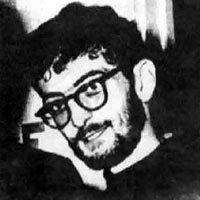
In a way it was as if Biondi were trying to pump some enthusiasm and excitement into a scene that was sagging pitifully. In 1960 the Congressional payola probe continued; in Philadelphia alone twenty-eight disc jockeys were canned. Picture of Dick Biondi
Dick BiondiRock also lost two more of its early stars, as one auto crash took Eddie Cochran in England (hospitalizing Gene Vincent) and another took Johnny Horton as he was en route to a show in Nashville. Even in the music there was death, as Ray Peterson sang about a stock car driver who entered a race to win money for a wedding ring, crashed and sang as his final words: Tell Laura I Love Her. (Of course dozens followed right along, recording saccharine smash hits of their own.) Rock and roll’s demise, like that of Mark Twain’s, had been greatly exaggerated  music with a beat still dominated sixty per cent of the Top 40  but more than Biondi’s screech was needed to bring things back to an exciting peak. Not all was gloom and doom, certainly. Elvis was back, after appearing in a film about an Army tank sergeant (natch!) called “G.I. Blues”, and warbling just like the good old days. Sam Cooke, the Everly Brothers, Ray Charles, Jackie Wilson and several others of real talent had hits.
Historically the scene was equally mixed. (As usual.) The French joined the nuclear club by exploding an A-bomb in the Sahara, Francis Gary Powers and his U-2 reconnaissance plane went down in the Soviet Union. (President Eisenhower got caught in a lie when he said he didn’t know anything about the U-2s.) Adolf Eichmann was captured in Argentina. Cuba began confiscating Amerlcan-owned factories on the Island. After spending twelve years on Death Row, Caryl Chessman was executed. The first sit-in was held in a Woolworth’s in North Carolina. And John Kennedy was elected President.
Other events of the year (some headlined, some unrecognized publicly): Pittsburgh took the World Serles from the Yankees … George Martin (who’d later produce records for the Beatles) was named to EMI’s artist and repertoire staff … Allen Drury’s “Advise and Consent” was given a Pulitzer Prize … “The Apartment” (starring Jack Lemmon, Shirley MacLaine and Fred MacMurray) got the Oscar for best picture … and Bob Dylan was a freshman named Robert Zimmerman at the University of Minnesota.
 Jerry Hopkins
The original Cruisin series was conceived and produced by Ron Jacobs. The “airchecks” on CRUISIN’ were not actual broadcasts, rather, they were masterful re-creations featuring legendary air talent.
Our thanks to RJ for making this classic material available to REELRADIO.
